Customer Story
How In-Game Analytics Can Fit Seamlessly Into Your Staff's Communication System
Union High School shows how analytics can speed up communication, not slow it down.
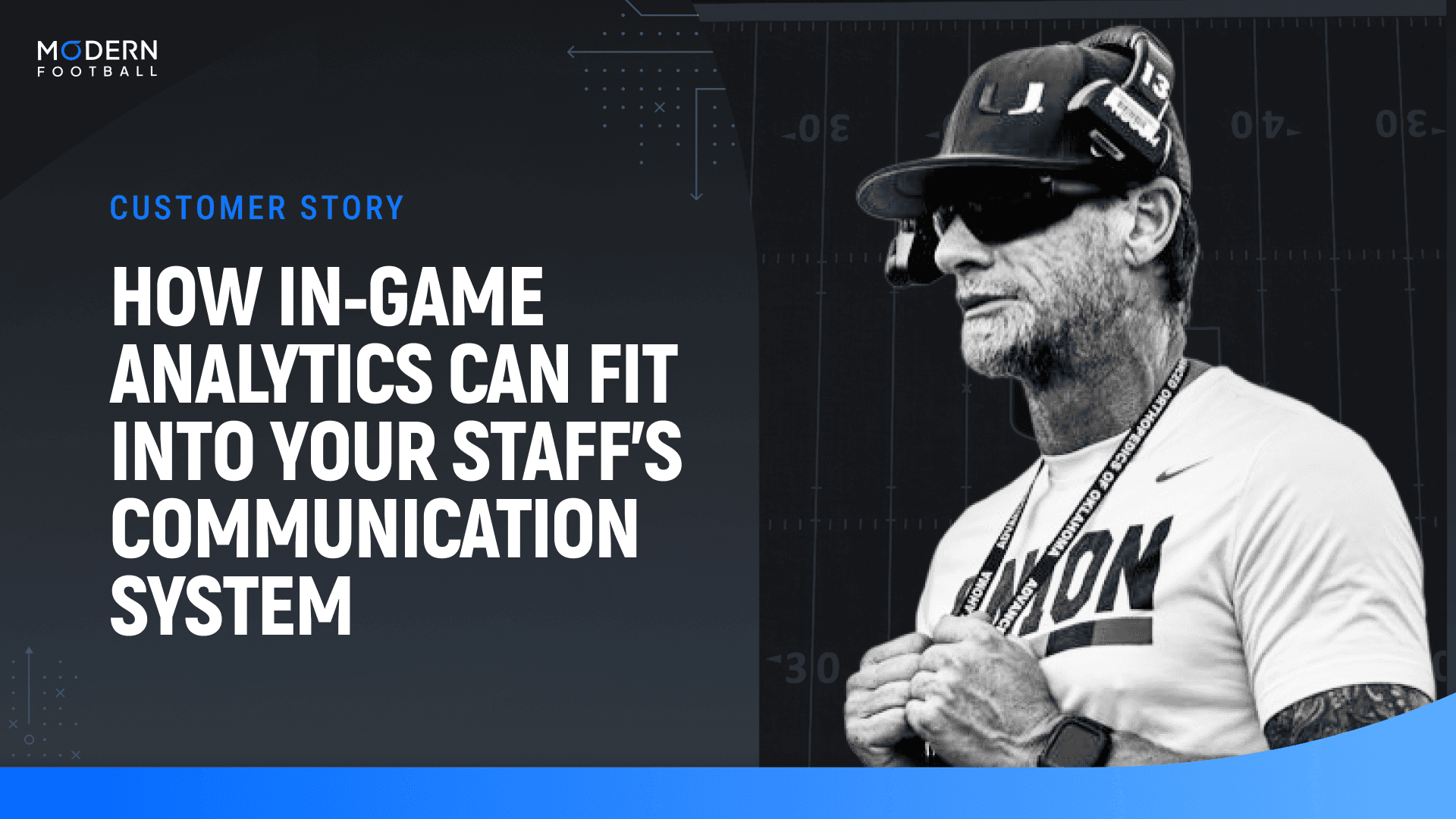
Every staff member has their own rhythm on game night. Some rely on long calls with built-in tags, others keep it short with wristband numbers or single words. Add the headset chatter, and the communication can sound chaotic to anyone outside the booth. The real question for coaches today is: when you add in-game analytics, will it slow you down—or speed you up?
At Union High School (OK), quarterbacks coach Johnny Ulibarri and offensive coordinator Dub Maddox faced that test when they introduced Modern Football Technology into their workflow. What they found was a system that fit them, instead of forcing them to change.
"Everybody calls stuff differently. Until you hear it, you don't fully grasp what it is. Once we had the backend set the way we needed, I could give Dub exactly what he wanted without slowing the game down."
Why Communication Systems Break Down
On Friday nights, systems fail when tools and staff don't align. Common breakdowns include:
Rigid software. Programs that only work one way, forcing coaches to adapt their process.
Unclear roles. Too many voices are trying to feed the play caller at once.
Information overload. Raw stats or handwritten charts that take too long to process in real time.
The result is hesitation instead of clarity.
How Union Made Analytics Seamless
Union didn't scrap their system to fit Modern Football. They shaped the technology to enhance what they already did:
Live onboarding. Having a Modern Football rep on the headset during spring ball allowed the system to "learn" Union's play-calling language.
Concept-first tagging. Instead of labeling every single variation, the staff grouped plays into concept families (inside zone, counter, flood). This gave Ulibarri fast efficiency data that matched Maddox's way of thinking about the game.
Coach-driven backend. Ulibarri set up reports to fit how he processes information so that he could deliver clean insights in seconds.
"Whoever's actually taking the information and putting it into something has to be the one who sets up the back end. It has to fit how their brain thinks."
By halftime, the staff wasn't debating what worked. The efficiency reports already laid it out. The conversation shifted from "what do we like?" to "what are they adjusting and how do we stay ahead?"
Lessons for Coaches
You don't need a college-level setup to get the same benefits. Here's how to make in-game analytics work for your staff:
Map your play-calling language. Decide how you'll group plays (families, tags, wristband numbers).
Define the flow. Assign who tracks efficiency and who feeds info to the play caller.
Simplify reports. Focus on concept-level data, not play-by-play clutter.
Adapt the tool. Choose a system—like Modern Football—that conforms to your workflow instead of forcing you to change it.
The Takeaway
Analytics don't help if they get in the way. Union's experience shows that when a tool fits seamlessly into your communication system, it eliminates the noise and delivers clarity. Modern Football gave their staff the ability to speak the same language they always had—only now, it came with real-time efficiency data that turned halftime adjustments into a weapon.